We kindly inform you that due to the summer holiday break, online ordering has been temporarily suspended until July 9, 2026. Orders can still be placed directly with our Sales Department at office@fiberlogy.com. Thank you for your understanding.




New
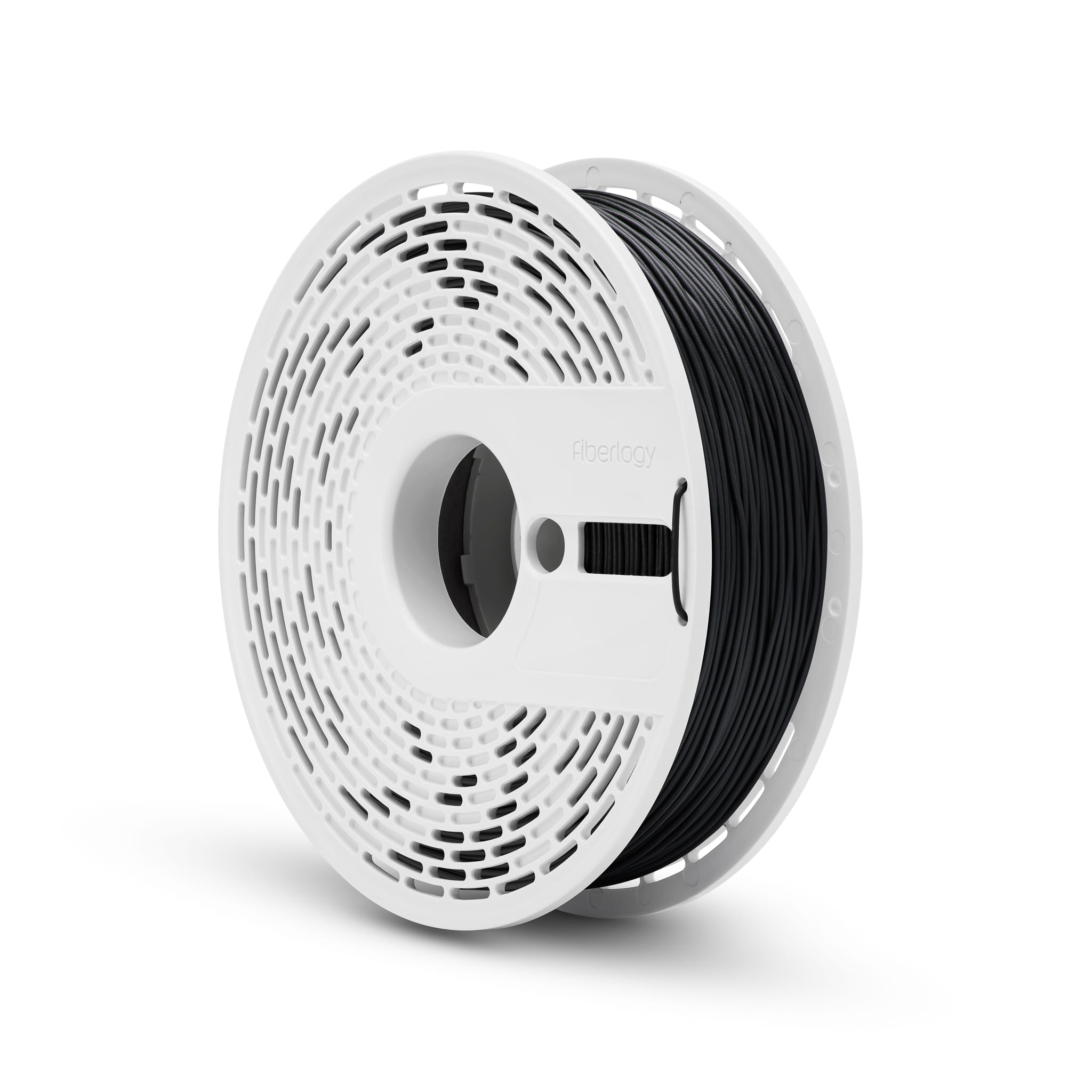
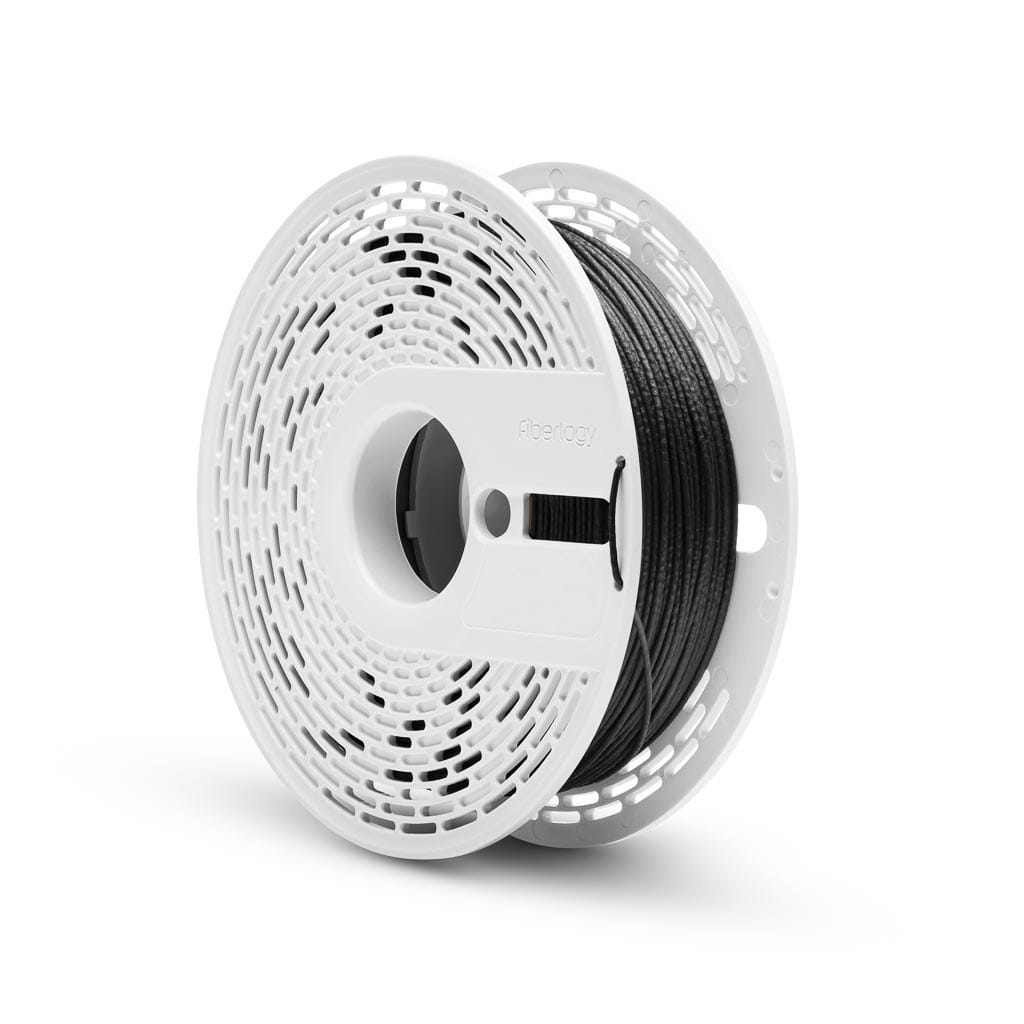
ABS+GF Filament - 1.75 mm - 0.75 kg
Fiberlogy ABS+GF is an advanced 3D printing filament that combines the versatility of ABS with the strength of glass fiber. It delivers rigid, lightweight, and deformation-resistant prints with excellent mechanical properties and impact resistance. The filament improves layer adhesion, reduces shrinkage, and lowers component weight, making it ideal for lightweight structures, drones, and parts requiring durability under demanding conditions.
Leave feedback on the product

ABS+GF Filament - 1.75 mm - 0.75 kg
Select product variant
Individual variants may differ in price
The presented colors are for reference only and may differ from the actual filament color depending on screen settings.
€23.30
Price
€23.30
without 23% VAT
€31.07 / kg
Regular price:
€23.30
The lowest price during 30 days prior to the reduction:
€20.12
The promotion runs until %s
Shipping costs are not included in the price.
€28.66
Price
€28.66
incl. 23% VAT
€38.21 / kg
Regular price:
€28.66
The lowest price during 30 days prior to the reduction:
€24.75
The promotion runs until %s
Shipping costs are not included in the price.
Ask about the product

ABS+GF Filament - 1.75 mm - 0.75 kg
Administratorem danych osobowych jest Fiberlab S.A.. Przetwarzamy je w celu przesłania odpowiedzi na zapytanie. Więcej informacji dotyczących przetwarzania danych osobowych znajduje się w polityce prywatności.
Share the product card


Product description
Product description
Fiberlogy ABS+GF is a professional 3D printing filament that combines the versatility of standard ABS with the exceptional strength of glass fiber. This material enables the creation of lightweight, rigid, and deformation-resistant prints, perfect for projects requiring high mechanical properties, abrasion resistance, and increased temperature tolerance.
The ABS+GF filament has been optimized for impact resistance and dimensional accuracy. Prints feature excellent layer adhesion, improved bed adhesion, and reduced shrinkage compared to standard ABS. Its lightweight structure and reduced component weight make ABS+GF an ideal material for manufacturing drone parts, lightweight mechanical structures, and functional components that require durability with minimal weight.
Fiberlogy ABS+GF helps reduce costs compared to other composite filaments while still delivering high strength and reliable print quality. It is the perfect choice for professionals, designers, and hobbyists who need a proven material for demanding operating conditions.
The production process of ABS+GF is carefully monitored at every stage – from raw material preparation and storage to the final filament. This approach ensures stable material properties, reliable printing, and dimensional repeatability, even in technically advanced projects.
Fiberlogy ABS+GF combines printability with high mechanical strength, impact and abrasion resistance, and material efficiency. It is the ideal solution for demanding 3D projects where both precision and durability matter.
Recommendations and tips
Recommendations and tips
Print settings
- Printing temperature 270-285°C
- Bed temperature 90°C
- Build surface Smooth PEI + adhesive; Textured PEI; Glass + adhesive
- Drying conditions 60°C / 4h
- Enclosure recommended
- Cooling fan 10-30%
Tips and recommendations
- Nozzle: The material is highly abrasive. A hardened steel or ruby nozzle is required.
- Handling: Use gloves (micro-damage to the skin may occur). When handling, use a dust mask and safety goggles.
- Increased brittleness: The filament shows a higher risk of spontaneous cracking. After finishing a print, always unload the filament from the printer.
- Increased cooling: For best print results, we recommend enabling cooling for overhangs (fan speed: 70–80%).
Properties
- Density 1.12 g/cm³
- Tensile Strength @ Break 50 MPa (ISO 527)
- Tensile Modulus 3500 MPa (ISO 527)
- Elongation @ Break 3.5% (ISO 527)
- Flexular Strength 70 MPa (ISO 178)
- Charpy Impact Strength (Notched) @ 23℃ 10 kJ/m2 (ISO 179)
- Charpy Impact Strength (Unnotched) @ 23℃ 30 kJ/m2 (ISO 179)
- Heat Distortion Temperature @ 0.45 MPa 90°C (ISO 75)
- Heat Distortion Temperature @ 1.8 MPa 80°C (ISO 75)
- Vicat Softening Temperature 95°C (ISO 306)
RAL/Pantone
To make it easier to choose the right color variant, we provide RAL and Pantone equivalents for filaments wherever possible. The given values are approximate and are intended to reflect the actual filament shade as closely as possible.
Why not HEX?
Providing the color of 3D printing filament in HEX format does not make sense because this notation was created to describe colors displayed on screens (RGB – monitors, TVs, mobile devices). HEX defines a mix of red, green and blue light, meaning a digital color. With filaments, however, we deal with a physical material. The same filament may look different in various photos and HEX cannot accurately represent the actual appearance of the material.
Much better references are color systems used in printing and industry, such as RAL or Pantone, which are based on real samples and allow for comparison of colors in physical reality.


Similar products
-
Price €19.56Price €15.90
-
Price €25.71Price €20.90
-
Promotional price €15.47Lowest price: €18.20-15%Price €12.58
-
Price €31.12Price €25.30
-
Price €31.12Price €25.30


User reviews
User reviews
Number of ratings: 1
If you've added a review and it doesn't appear on the list, it may be pending moderation.
Leave feedback on the product


