We kindly inform you that due to the holiday and New Year break, orders placed after 12:00 PM (CEST) on December 19, 2025 will be processed starting January 2, 2026, in the order in which they are received.
Thank you for your understanding and we wish you happy holidays and a happy New Year.


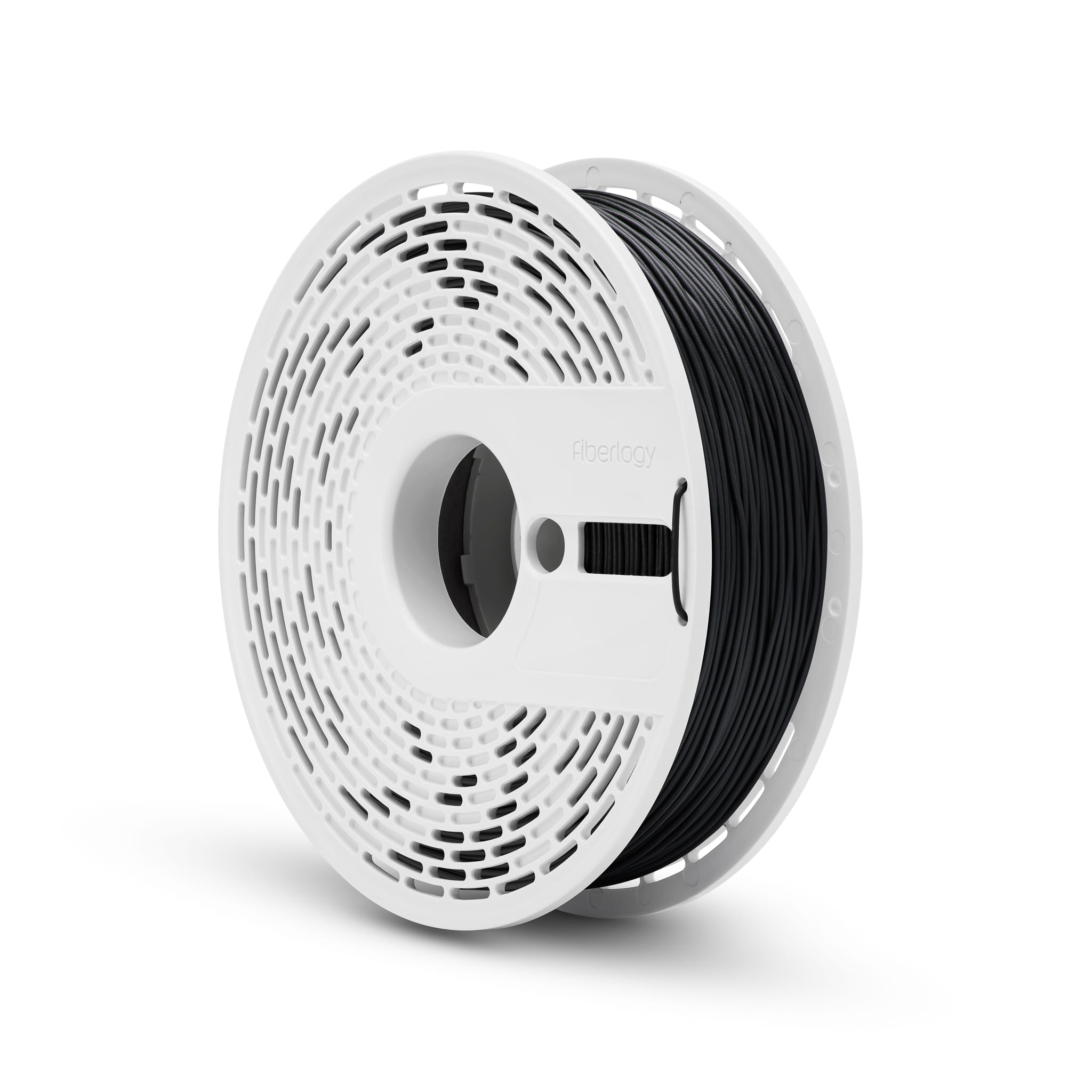
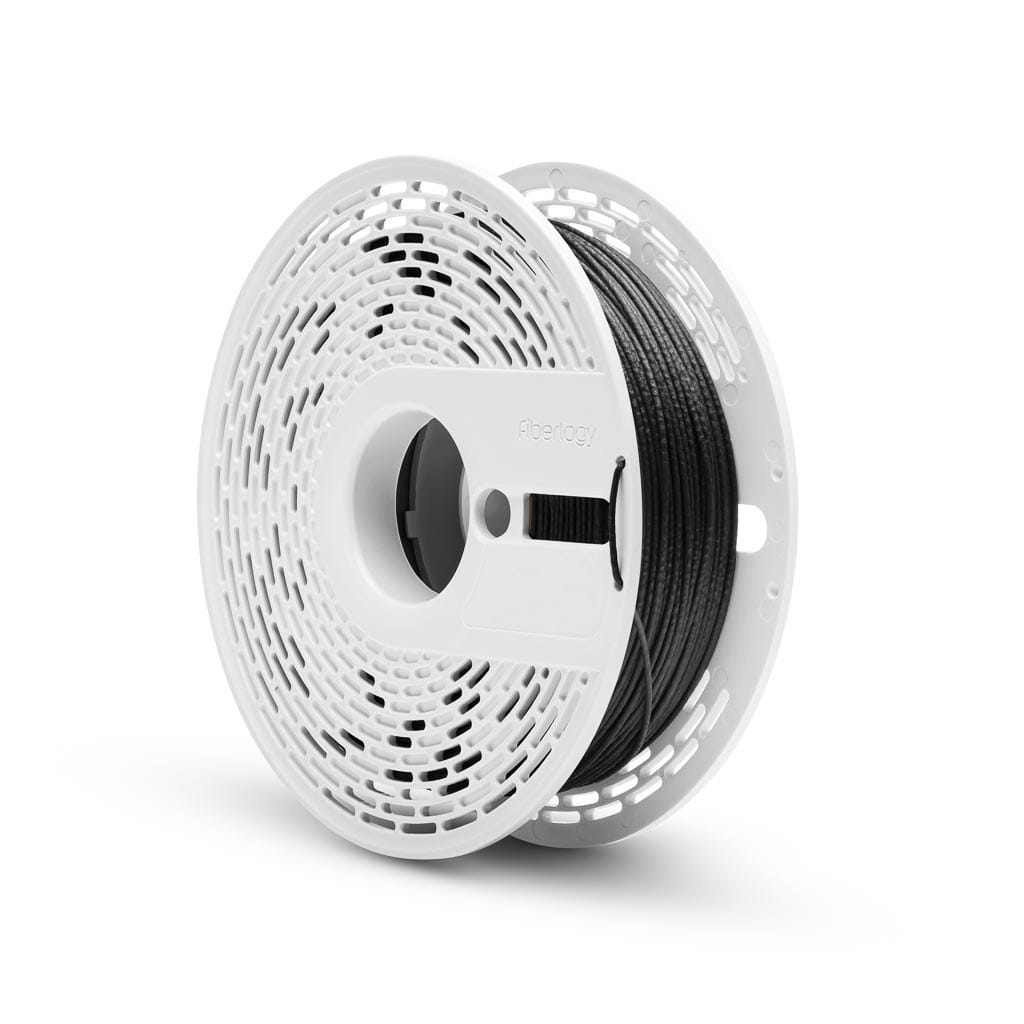


PETG ESD Filament - 1.75 mm - 0.5 kg
Fiberlogy PET-G ESD is a filament designed to protect electronic components sensitive to electrostatic discharge. Its dissipative and antistatic properties effectively minimize the risk of damage to electronics. Ideal for printing enclosures for integrated circuits, sensors, and measuring instruments.
Leave feedback on the product

PETG ESD Filament - 1.75 mm - 0.5 kg
Select product variant
Individual variants may differ in price
The presented colors are for reference only and may differ from the actual filament color depending on screen settings.
€48.80
Price
€48.80
without 23% VAT
Regular price:
€48.80
The lowest price during 30 days prior to the reduction:
€50.61
The promotion runs until %s
Shipping costs are not included in the price.
€60.02
Price
€60.02
incl. 23% VAT
Regular price:
€60.02
The lowest price during 30 days prior to the reduction:
€62.25
The promotion runs until %s
Shipping costs are not included in the price.
Ask about the product

PETG ESD Filament - 1.75 mm - 0.5 kg
Administratorem danych osobowych jest Fiberlab S.A.. Przetwarzamy je w celu przesłania odpowiedzi na zapytanie. Więcej informacji dotyczących przetwarzania danych osobowych znajduje się w polityce prywatności.
Share the product card


Product description
Product description
Fiberlogy PET-G ESD is a specialized 3D printing filament designed for the electronics and industrial sectors. It is engineered to effectively protect sensitive components from the destructive effects of electrostatic discharge (ESD). Thanks to its dissipative and antistatic properties, the energy from the surface of a printed part is safely discharged, significantly reducing the risk of damage to electronics.
Electrostatic discharges can cause serious equipment failures, costly repairs, and component replacements. Using PET-G ESD filament allows companies and engineers to eliminate ESD hazards already at the design and prototyping stage.
Key properties:
-
High ability to dissipate and conduct electrostatic charges
-
Excellent mechanical and chemical resistance typical of PET-G
-
Low shrinkage and easy to print
-
Precise and stable prints without the need for a heated enclosure
Fiberlogy PET-G ESD is ideal for producing components for the electronics and measurement industries. It is perfect for printing:
-
Enclosures for integrated circuits and PCBs
-
Covers and housings for sensors and connectors
-
Measuring instruments and service components
-
Parts requiring protection against electrostatic discharge
Recommendations and tips
Recommendations and tips
Print settings
- Printing temperature 250-265°C
- Bed temperature 85°C
- Build surface Smooth PEI + adhesive; Textured PEI; Glass + adhesive
- Drying conditions 60°C / 4h
- Enclosure recommended
- Cooling fan 0-25%
Tips and recommendations
- Nanoparticles: Due to the presence of nanoparticles, the filament structure is not smooth. Occasional thickening is natural but does not affect the correct filament diameter, which remains within the declared tolerance.
- Possible nanoparticle accumulation: Because of potential nanoparticle accumulation, we recommend using a 0.6 mm nozzle. If clogging occurs, increase the printing temperature.
- Possible bed damage: Due to strong adhesion to the surface, printing directly on the bed or glass is not recommended, as this may cause damage. We recommend using adhesives or masking tape.
- Recommended 0.6 mm nozzle: To avoid potential nozzle clogging, we recommend using a nozzle with a diameter of 0.6 mm.
Properties
- Density 1.3 g/cm³
- Tensile Strength @ Break 50 MPa (ISO 527)
- Tensile Modulus 2400 MPa (ISO 527)
- Elongation @ Break 5% (ISO 527)
- Izod Impact Strength (Notched) @ 23℃ 3 kJ/m2 (ISO 180)
- Heat Distortion Temperature @ 0.45 MPa 75°C (ISO 75)
- Glass Transition Temperature 85°C (DSC)
- Surface Resistivity 10⁵ – 10⁸ Ω (ASTM D257 1991)
- Volume Resistivity 10⁵ – 10⁷ Ω*cm (IEC 60093)
RAL/Pantone
To make it easier to choose the right color variant, we provide RAL and Pantone equivalents for filaments wherever possible. The given values are approximate and are intended to reflect the actual filament shade as closely as possible.
Why not HEX?
Providing the color of 3D printing filament in HEX format does not make sense because this notation was created to describe colors displayed on screens (RGB – monitors, TVs, mobile devices). HEX defines a mix of red, green and blue light, meaning a digital color. With filaments, however, we deal with a physical material. The same filament may look different in various photos and HEX cannot accurately represent the actual appearance of the material.
Much better references are color systems used in printing and industry, such as RAL or Pantone, which are based on real samples and allow for comparison of colors in physical reality.

Similar products
-
Price €40.71Price €33.10
-
Price €52.77Price €42.90
-
Price €38.31Price €31.15
-
Promotional price €36.94Lowest price: €31.66--17%Price €30.03
-
Price €19.56Price €15.90


User reviews
User reviews
Number of ratings: 0
If you've added a review and it doesn't appear on the list, it may be pending moderation.
Leave feedback on the product


