
How can you prevent the print from peeling off the build plate?

A print peeling off the build plate or a lack of adhesion on the first layer is one of the most common causes of failure in 3D printing. There can be several reasons for this:
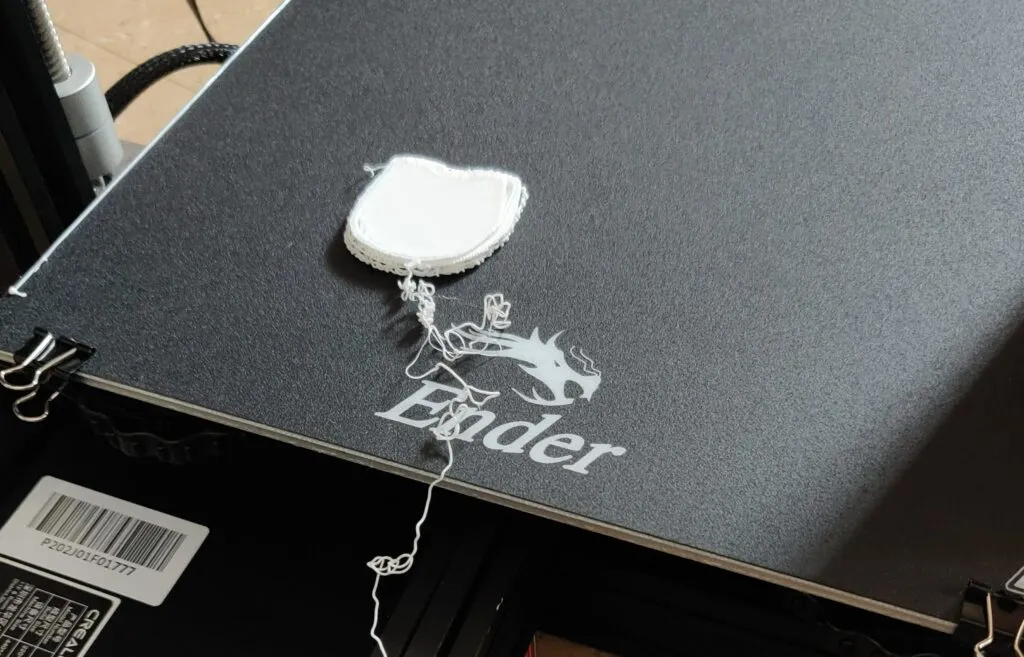
A Dirty Table
It’s a mundane reason, but it’s often the very thing that stands in the way of a successful print. A properly prepared print bed should be free of residue from previous prints and degreased, for example, with window cleaner or vinegar.
A table that isn’t level
Depending on the printer, it may be equipped with an automatic table leveling system or may require manual adjustment, for example, by adjusting the tightness of the screws. You can find instructions on how to level the table in your printer’s documentation.
The nozzle is too far from the table
To achieve a perfect first layer, the correct height of the nozzle above the build plate (Z-axis) is crucial. The ideal layer should be slightly compressed, but the nozzle should not sink into the filament that has already been deposited.
The height of the first layer can be adjusted directly from the printer’s control panel by raising the Z-axis in so-called “baby-steps.” Setting a negative value moves the nozzle closer to the bed, while positive values move it farther away.
Low table temperature
Increasing the temperature of the print bed can improve the chances of the polymer adhering properly to its surface. This prevents the material from shrinking as it cools, which is caused by the fan cooling the print as well as drafts on printers with an open chamber.
Recommended table temperatures:
- PLA / FiberFlex: 50–70 °C
- PET-G: 90°C
- ABS / NYLON: 90–110°C
Poor adhesion
If the above tips do not help, it may be necessary to increase adhesion by using additional structures, such as a brim or a raft, or by using adhesion-enhancing agents.
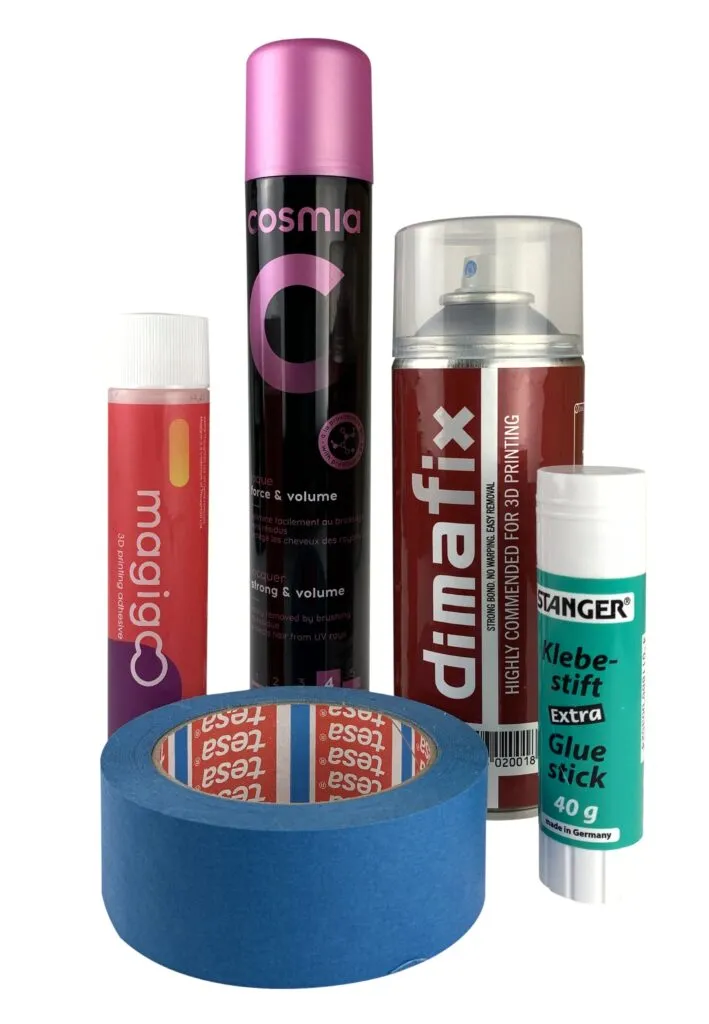
The latter category includes specialized cleaning products such as sprays (e.g., Dimafix) and liquids (Magigoo).
However, it’s not uncommon for household remedies such as masking tape (e.g., TESA), hairspray, or a PVA glue stick to work perfectly.