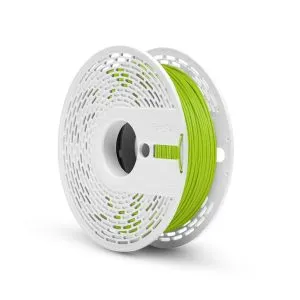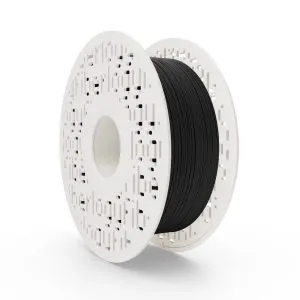

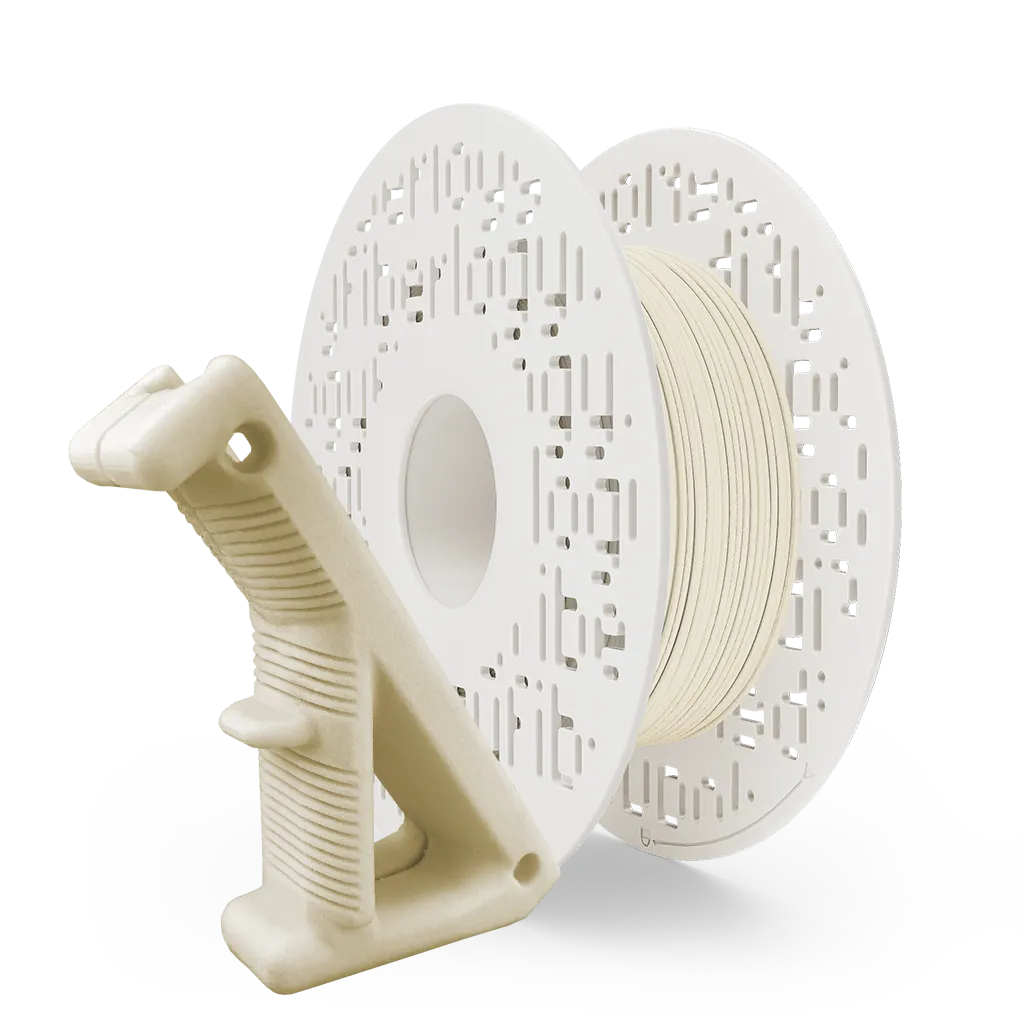
Nylon PA12+GF Filament

The material absorbs impact energy without cracking or shattering.

Dimensional stability ensures that the model is reproduced accurately after printing.

The print retains its shape at temperatures up to 170°C without warping.

PA12 is less prone to absorbing moisture than, for example, PA6 filaments
Filament available in the new spool system. Compatible with BambuLab AMS.
Fiberlogy Nylon PA12+GF15 is an advanced engineering filament based on Nylon PA12, further reinforced with 15% glass fiber (GF). Thanks to this modification, its mechanical, chemical, and thermal properties have been significantly improved, making it an excellent material for demanding industrial and technical applications.
The addition of glass fiber gives the filament a stiffness of 3.6 GPa and allows it to withstand temperatures of up to 170°C. Compared to pure PA12 nylon, it offers significantly better mechanical and chemical resistance, as well as greater durability of the finished parts.
Unlike the carbon-fiber variants (PA12+CF5 and PA12+CF15), the glass-fiber version offers greater flexibility. As a result, prints better withstand variable loads, impacts, and vibrations, making this filament an ideal choice for parts operating under demanding conditions.
The filament is distinguished by its very low shrinkage, which ensures excellent dimensional stability. Unlike many engineering nylons, PA12+GF15 does not require a heated print chamber, which makes this material more accessible even for home use.
Fiberlogy PA12+GF15 is ideal for:
- the automotive and machinery industries—load-bearing components,
- the production of technical parts—impact- and abrasion-resistant components,
- engineering – prototypes and final parts requiring high thermal and mechanical resistance.
Due to the high abrasiveness of glass fiber, it is recommended to use steel or ruby nozzles during printing to prevent excessive wear on standard brass nozzles.
-
High mechanical strength and impact resistance
The material absorbs impact energy without cracking or shattering.
-
Reduced shrinkage and good dimensional stability
Dimensional stability ensures that the model is reproduced accurately after printing.
-
Temperature resistance up to 170°C
The print retains its shape at temperatures up to 170°C without warping.
-
Lower susceptibility to moisture
PA12 is less prone to absorbing moisture than, for example, PA6 filaments
Printing Parameters
- Printing temperature: 255–270°C
- Bed temperature: 110°C
- Bed material: Smooth PEI + adhesive; Textured PEI + adhesive; Glass + adhesive
- Curing conditions: 80°C / 4 hours
- Enclosed chamber: not required
- Airflow: 0–25%
Technical Specifications
- Density: 1.13 g/cm³
- Charpy impact strength (notched) @ 23°C: 16 kJ/m² (ISO 179)
- Volume resistivity: 10¹⁵ Ω*cm (IEC-62631-3-1)
- Surface resistivity: 10¹⁴ Ω (IEC-62631-3-2)
- Heat deflection temperature under load @ 1.8 MPa: 165°C (ISO 75)
- Heat deflection temperature @ 0.45 MPa: 175°C (ISO 75)
- Tensile strength at break: 72 MPa (ISO 527)
- Tensile modulus: 3,100 MPa (ISO 527)
- Elongation at break: 8% (ASTM D638)
- Charpy impact strength (unnotched) @ 23°C: 85 kJ/m² (ISO 179)
-
 Natural
 -
 Black
Black